
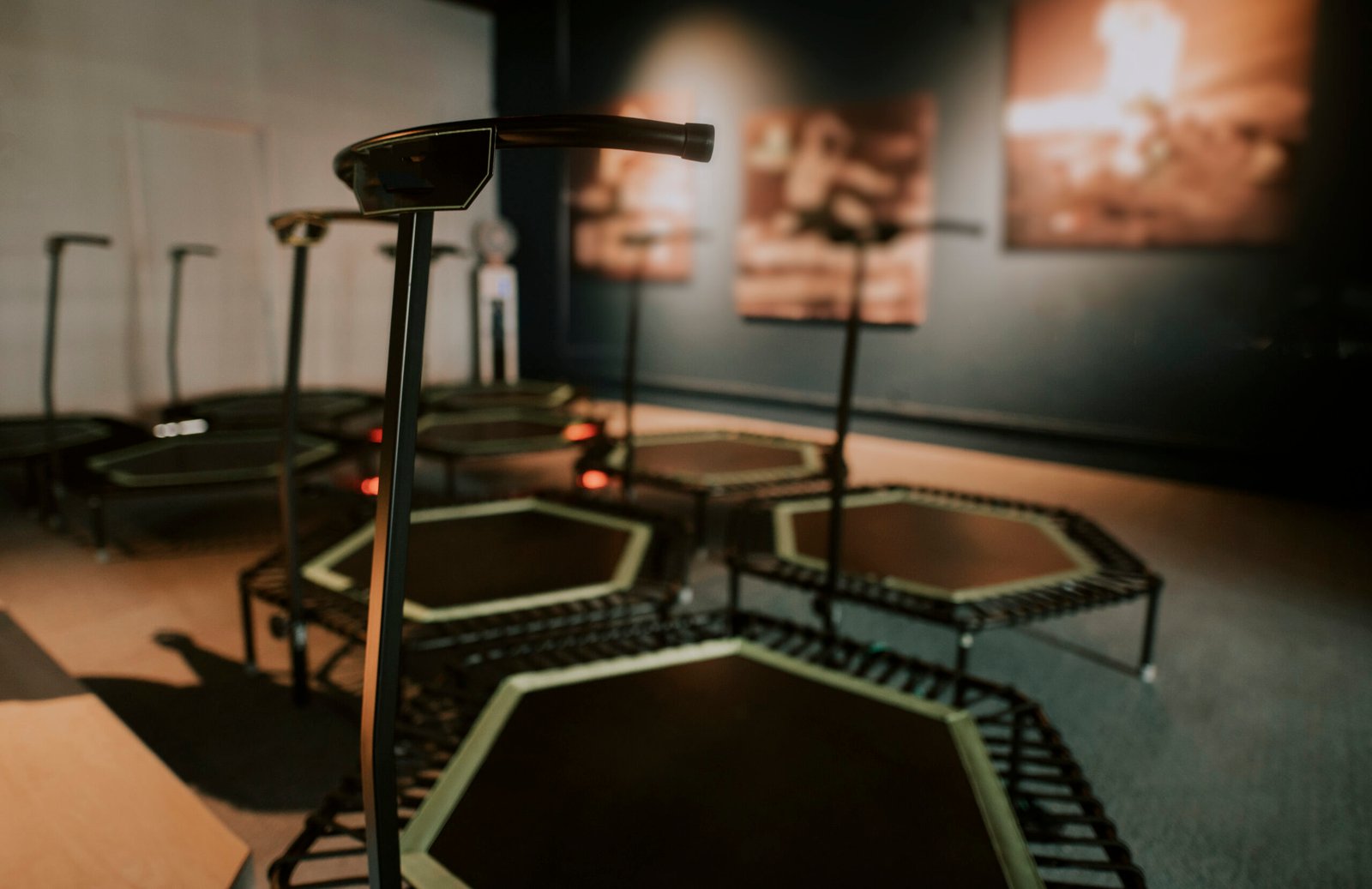
A Gentle Way to Support Your Lymphatic System, Energy and Nervous System
For many people, the idea of movement can feel overwhelming.
When your body is already tired, inflamed, or struggling to regulate, intense exercise can feel like
another stressor rather than something supportive. And over time, that can create a quiet resistance
— not to movement itself, but to the way it’s often presented.
But not all movement asks the same thing from the body.
Some forms of movement work with it.
Rebounding is one of them.
What rebounding does inside the body
Rebounding — gentle, repetitive bouncing on a trampoline — might look simple from the outside,
but internally it creates a very specific physiological response.
As your body moves up and down, it experiences alternating forces of acceleration and deceleration.
This constant shift in gravitational load creates what is often described as a “pump-like” effect
throughout the tissues.
Fluids begin to move more efficiently. Circulation increases. Cells are exposed to subtle mechanical
stimulation that encourages activity at a cellular level.
It isn’t driven by intensity. It’s driven by rhythm — and the body responds to that rhythm in a way
that feels supportive rather than depleting.
Supporting lymphatic flow and natural detox processes
The lymphatic system is responsible for clearing what the body no longer needs. It moves fluid,
waste products, and cellular debris through a network of vessels and nodes, helping to keep the
internal environment balanced and less burdened.
Unlike the heart-driven circulation of blood, this system depends on physical movement to keep
things flowing. When movement is limited, lymph can begin to pool. Over time, that can contribute
to a sense of heaviness, puffiness, or a body that feels slower to recover.
Rebounding creates a gentle change in pressure with each bounce — a repeated compression and
release that encourages lymph to move.
This supports the clearance of metabolic waste and excess fluid, helping the body maintain a
cleaner, more efficient internal environment.
It’s subtle, but consistent. And for a system that relies on movement, that consistency matters.
How rebounding supports immune coordination
A large part of the immune system operates through the lymphatic network. This is where immune
cells are transported, where they encounter what’s circulating in the body, and where responses are
organised before being carried out.
When lymph flow improves, so does that internal communication. Immune cells are able to move
more freely, interact more efficiently, and respond without the same level of delay or strain.
Rebounding supports this by gently increasing lymph circulation — not by stimulating the immune
system directly, but by improving the environment it depends on.
That distinction matters. Because the goal isn’t to push the immune system harder.
It’s to help it work in a more coordinated, responsive way — reducing unnecessary stress on the
body while supporting its natural ability to adapt.
A different kind of movement for the nervous system
Not all exercise feels safe to the nervous system.
High-intensity training, while beneficial in some contexts, can elevate stress hormones and place
additional demand on a body that may already be overwhelmed.
Rebounding offers a different experience.
The repetitive, rhythmic motion provides consistent sensory input that the nervous system can
interpret as predictable and safe. Over time, this can help reduce the dominance of a chronic stress
response and support a shift toward a more regulated state.
For some people, it becomes less about exercise and more about recalibration. A way of reminding
the body that it doesn’t need to stay in constant alert.
Supporting energy production and metabolic balance
Movement influences how the body produces and uses energy at a cellular level.
Rebounding increases circulation and oxygen delivery, both of which are essential for mitochondrial
function — the process by which cells generate energy.
At the same time, gentle, consistent movement can support insulin sensitivity, helping the body
move glucose into cells more effectively and reducing the likelihood of sharp energy highs and
crashes.
Over time, this can translate into more stable energy, improved metabolic flexibility, and a reduced
sense of fatigue throughout the day.
Low-impact, accessible movement
One of the reasons rebounding is so well tolerated is that it is low impact.
The surface of the trampoline absorbs force, reducing stress on the joints, spine, and connective
tissues. This allows movement to feel supportive rather than straining, particularly for those dealing
with chronic pain, fatigue, or recovery.
It creates an entry point back into movement — one that doesn’t rely on pushing through
discomfort.